Feeds:
Posts
Comments

You can buy it from Amazon – click here.

The title is Moen jo Daro: Metropolis of the Indus Civilization (2600-1900) BCE). The text is interspersed with the original images specially photographed for this book by Pakistan’s well-known photographer Amean J. It is also enhanced by the artwork of internationally known artist Laila Shahzada. The book is reviewed by Dr. Subhash Kak, Regents Professor Oklahoma State University and Dr. Shoukat Shoro, the former Director of the Institute of Sindhology, Jamshoro Pakistan.

The idea of writing a book on Moen jo Daro for general readers was given to me by Dr. N.A. Baloch. At the same time he suggested that it should not be a handbook of the site but a work presenting Moen jo Daro in a wider historical and geographical context of the Indus region; it should inspire the future generations to seek clues in the languages, legends and folktales of Sindh, Balcohistan, Rajasthan, Kutch, Gujrat, Punjab and beyond. Later on he wrote the foreword of the book.

Indus civilization was spread over a vast area and archaeology allows crossing political boundaries; hence, I approached Dr. Vasant Shinde to write a second foreword of the book. Dr. Shinde is working on the Harappan sites discovered in the Indian Punjab and he is also the vice chancellor of the prestigious Deccan College deemed University. His foreword is most befitting as Moen jo Daro symbolizes the common heritage and history of Pakistan and India.
Moen jo Daro: Metropolis of the Indus Civilization (2600-1900) BCE) is now available on Amazon.com for purchase – Click here.

It is a personal view book and is divided in nine chapters, below is a brief description of these chapters.

The first chapter is about myths and legends thriving in the Indus region. Due to lack of direct references to Moen jo Daro legends can become one of the valuable sources of information. The chapter demonstrates how some of these can hold important clues for the understanding of Moen jo Daro and Indus Civilization.

The second chapter is about the Mound of Dead which is the English translation of Moen jo Daro. The Mound was crowned with the remains of a Buddhist stupa which led to the discovery of this ancient city. The chapter gives the history of the discovery of the stupa which was actually the major attraction for British officials. It also provides the background information on the Buddhist period and Buddhism in Sindh.

The third chapter describes the layout of the two parts of the city. It also lists the artifacts discovered from its ruins. Most of these are showcased at the site museum of Moen jo Daro and the National Museum, Karachi. With the exception of a few, the photographs of the architectural remains and the artifacts are by Amean J.

Chapter four describes the geographical extent of the Indus Civilization as well as its origins, its nature and its decline. Beginning from the Neolithic agrarian communities of Balochistan, it traces their socio-cultural evolution to a mature urban phase that bloomed in the Indus Valley. Moen jo Daro in this chapter is examined in the larger context of the Civilization.

Chapter five is an attempt to reconstruct the picture of the inhabitants and their life in Moen jo Daro and Indus Valley. It also refers to the views of various archaeologists and how their reconstructed pictures differ from each other according to their orientation and generation.

Chapter six describes the ideology of the ancient Indus society as reconstructed through a variety of evidence gathered from Moen jo Daro and a few other significant Indus sites. The chapter sheds some light on the possible links between the ancient Indus ideology and the later Hindu, Buddhist, and Jain religions. It also examines the status of women and the role of mother goddesses in those remote times.

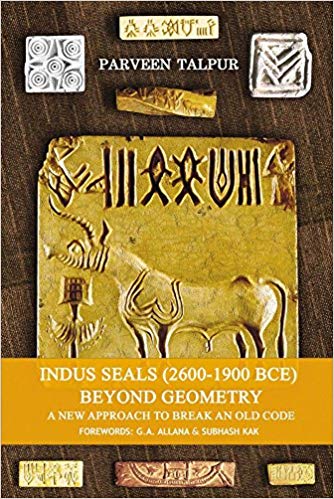
Chapter seven deals with the most striking finds – the enigmatic signs and symbols engraved on tiny steatite seals. It gives a history of their decipherment and the hurdles in research. In this chapter I also share my research on the signs and symbols engraved on the seals.

Chapter eight explores the reasons of the ‘sudden collapse’ of the urban phase of Indus Civilization. Beginning with the Aryan invasion theory and its rejection, it highlights a few other sites to explain a gradual deterioration of the urban centers and an eastward migration to Gujarat.

Chapter nine gives the background of the international campaign of saving Moen jo Daro from the threats of water logging and salinity. It includes the preservation measures recommended by Pakistani officials and experts from UNESCO member countries. In this chapter I also appeal to the readers to join me in my campaign calling for the three-dimensional digital preservation of Moen jo Daro. You can also see a related blog here.

It has been quite a journey working on “Moen jo Daro: Metropolis of the Indus Civilization,” my forthcoming book on the ancient, mysterious city and its civilization. Moen jo Daro did not allow me the time to write a blog and demanded a lot of reading and rereading, researching, fact checking, writing and rewriting.

Often times my writing activity led me to several other sites of the Indus civilization, some of these being beyond political boundaries – in India, in Afghanistan, and one of them even almost touching the border of Iran. Sutkagen Dor, located in the Dasht River Valley, is also the westernmost site of Indus civilization. So while writing the story of the city I often found myself writing the story of the civilization.

On the way I came across archaeologists, artists and photographers whose expeditions were worth following. Sometimes they led me to detours and sometimes unexpectedly to destinations so relevant to Moen jo Daro. And then there are interpretations and arguments of various archaeologists that had to go in the book.

Sir John Marshall viewed life in Moen jo Daro as being peaceful and mercantile, similar to a working town like Lancashire. K.N Dikshit, reflecting on the cosmopolitan bazaars of Moen jo Daro and Harappa, where merchants from Persia, Mesopotamia, Gujarat and South India exchanged goods, found it closer to the cosmopolitan cities like Karachi and Bombay. Sir Mortimer Wheeler’s views were dramatic, as he saw the Indus civilization as an empire ruled by a theocracy seated on the citadel mound of Moen jo Daro. And since the rise of each empire is followed by a fall, he felt that the cities of Indus were finally destroyed by the Aryan hordes, led by their thunder God, Indra. George Dales, after rummaging through the streets of Moen jo Daro and finding no evidence of a massacre absolved Indra. But this has not resolved the issue of the decline of the city and its civilization.

There is yet another issue, the socio-cultural nature of the city, which remains mysterious. And this is because of the hurdles in the journey of Indus’ research; there are no references to Indus cities in later Indian texts and the inscriptions engraved on the seals discovered from these cities have not been deciphered. Hence, in the absence of any direct source of information, even a simple task of establishing Moen jo Daro’s chronology was accomplished by cross dating some of its objects discovered in distant Sumer. And this has led many experts to examine the civilization with the yardstick set for other ancient civilizations.

The fact is that Indus did not mature to a highly state-organized society like its contemporaneous Egyptian and Mesopotamian civilizations. Far from being an empire it is not even confirmed whether Indus civilization had a ruling authority or not and if it had, was it secular or theocratic; male or female. What is certain is that it lasted from 2600 to 1900 BCE and remained arrested in an urban phase. Its cities therefore lack imperial architecture such as the palaces, temples, pyramids, ziggurats and the royal tombs.

Perhaps, it is time to judge Indus on its own merit especially as the criterion to judge a civilization is beginning to change. In his book “Civilization: The West and the Rest,” Nial Ferguson, a historian of the twenty first century writes, “The success of a civilization is measured not just in its aesthetic achievements but also, and surely more importantly, in the duration and quality of life of its citizens. And that quality of life has many dimensions, not all easily quantified.”

Taking into consideration just a few important dimensions, my book places Moen jo Daro at a stage on the ladder of socio-cultural evolution where rigid classes had not yet been formed but where professional specialization had made distinctions between the brick makers and woodworkers, between weavers and dyers, between potters and scribes. The civilization was also at the stage where ideology had not yet given way to a religion. It took many centuries for Moen jo Daro water cults to evolve rigid rituals of purifying the soul, the likes of which are best witnessed at River Ganges.

The most intriguing finds of Moen jo Daro are the tiny steatite seals engraved with cryptic symbols, signs and human and animal images. More than 2000 of these had been discovered from various Indus cities, the largest number (over 1200) were discovered from Moen jo Daro. The seals have become a hallmark of Indus civilization and the symbols and signs engraved on these are believed to be an ancient form of writing representing an unknown language. Hence, many archaeologists believe that the story of Moen jo Daro is encrypted on the seals an for the last one century more than one hundred failed attempts have been made to decipher the script.

This leads me to believe that perhaps, Indus civilization existed in a period in pre-history where writing, in the conventional sense, had not yet taken birth but symbols that may have later evolved to alphabets were in the making. It was a period when images of animals and inscriptions, swastikas and circles, triangles and gammadions were all rolled into one. Distinctions between alphabets and numbers, between art and writing and between geometry and religion were yet to set. The value of Indus civilization, therefore, lies in the fact that it has preserved the first chapter of the origins of writing; overall, it is a rare snapshot of an urban boom which erupts before empires are formed. Moen jo Daro provides the most panoramic view of that boom.

http://www.telegraph.co.uk/news/worldnews/nelson-mandela/10142046/Nelson-Mandela-dies-aged-95.html

Good old Madiba dies at the age of 95.

He will always be remembered for his heroic struggle against apartheid, for the restoration of human rights and for setting up The Truth and Reconciliation Commission. On his departure media will be reminding us of all his spectacular achievements, somehow, I am reminded of a simple passage wherein he wistfully describes his village. It reflects the honesty and innocence of a man who longed for freedom and who suffered a long and rigorous prison term under the man-made unjust laws.

Rest in peace Madiba in the grassy valley with green hills and clear streams.

“THE VILLAGE OF QUNU was situated in a narrow, grassy valley crisscrossed by clear streams, and overlooked by green hills. It consisted of no more than a few hundred people who lived in huts, which were beehive-shaped structures of mud walls, with a wooden pole in the center holding up a peaked, grass roof. The floor was made of crushed ant-heap, the hard dome of excavated earth above an ant colony, and was kept smooth by smearing it regularly with fresh cow dung. The smoke from the hearth escaped through the roof, and the only opening was a low doorway one had to stoop to walk through. The huts were generally grouped together in a residential area that was some distance away from the maize fields. There were no roads, only paths through the grass worn away by barefooted boysand women. The women and children of the village wore blankets dyed in ocher; only the few Christians in the village wore Western-style clothing. Cattle, sheep, goats, and horses grazed together in common pastures. The land around Qunu was mostly treeless except for a cluster of poplars on a hill overlooking the village. The land itself was owned by the state. With very few exceptions, Africans at the time did not enjoy private title to land in South Africa but were tenants paying rent annually to the government. In the area, there were two small primary schools, a general store, and a dipping tank to rid the cattle of ticks and diseases. Maize (what we called mealies and people in the West call corn), sorghum, beans, and pumpkins formed the largest portion of our diet, not because of any inherent preference for these foods, but because the people could not afford anything richer. The wealthier families in our village supplemented their diets with tea, coffee, and sugar, but for most people in Qunu these were exotic luxuries far beyond their means. The water used for farming, cooking, and washing had to be fetched in buckets from streams and springs. This was women’s work, and indeed, Qunu was a village of women and children: most of the men spent the greater part of the year working on remote farms or in the mines along the Reef, the great ridge of gold-bearing rock and shale that forms the southern boundary of Johannesburg. They returned perhaps twice a year, mainly to plow their fields. The hoeing, weeding, and harvesting were left to the women and children. Few if any of the people in the village knew how to read or write, and the concept of education was still a foreign one to many.”

 Nelson Mandela “Long Walk to Freedom.”

About half a century ago Indus Civilization (2600-1900 BCE) was known to the world mostly through Moen jo Daro and Harappa, the two largest ancient sites in Pakistan. The Civilization, however, was spread over an area of about a million square kilometers with hundreds of buried sites, hence 1500 more have been discovered since then and out of these 1000 are in India.  This is because India had launched an extensive exploration program soon after the Partition. One of the main architects to lay the foundations of post-Partition archaeology policy was Maulana Abul Kalam Azad. For those who are curious to see how far a maulana can go in a secular field I must inform that Azad was not a maulana in the mullah sense. He was a scholar of Islam, an astute statesman, a dedicated writer and a freedom fighter. He stood against the British colonial rule but he was not in favor of Partition as he believed in Hindu Muslim unity and endorsed  secularism.  Incidentally, yesterday November 11, when I was writing this blog India was celebrating his 125th birth anniversary.

 Maulana was the first Minister of Education of the independent India and he remained on this post until his death in 1958.  In this capacity he may have spoken on various aspects of archaeology on many occasions, my attention was drawn to one of the speech he delivered while presiding over the 6th meeting of the Central Advisory Board of Archaeology on July 2, 1949. He began with the tremendous work done on the Egyptian and Mesopotamian archaeology and gave credit to the Biblical references which helped the archaeologists in locating the ancient sites and in the reconstruction of their past. Most of us know that Indus Civilization is deprived of such references, even the Vedas, the ancient most texts do not make any reference to a lost Civilization that once flourished on Sapta Sindhu, the Land of the Seven Rivers, as mentioned in the Rig Veda. The land now has five rivers as Saraswati and Drishadwati had changed courses long ago.


Maulana Azad also acknowledged the great work of British and other archaeologists that had gone in the excavations of the monumental structures scattered around the Nile, Euphrates and Tigris and he compared it with the work done on the Indian soil. He also gave a good account of the ‘checkered history of the department of archaeology’ which at one point was almost abolished and was saved only by the intervention of George Nathaniel Curzon, Viceroy of India (1899-1905).  Curzon is mostly remembered for his notorious Partition of Bengal but Maulana reminded the audience of his role- promoting research and preservation of archaeological and historical monuments- which the viceroy considered to be his ‘imperial obligation.’  Curzon also centralized the administration of archaeology and appointed a young John Hubert Marshall as the Director General of Archaeological Survey of India (1902-1931).  Marshall describes the impoverished state of archaeology. “I entered upon my office as Director General on the 22nd February, 1902…previous to my appointment the office of the director general had been in abeyance since the retirement of Dr. Burgess in 1889, in which year the Government of India decided, on grounds of financial economy, to limit the Archaeological staff to a government epigraphist and three provincial surveyors-for Madras, Bombay and the United Provinces- with the addition of an architectural assistant for the last named circle.” Beginning with four staff members, two decades later Marshall was to hire 1100 laborers to excavate the site of Moen jo Daro which turned out to be the most spectacular archaeological discovery of British India.  

 After Partition while Maulana emphasized to ‘utilize the resources of archaeology to discover ancient history’  he also recommended work in Jaiselmer and Bikaner as these were connected to Indus Valley Civilization.  This was the beginning of the exploration campaign that unearthed hundreds of Indus sites. Prominent among these are Kali Bangan (near Delhi) Lothal (Gujarat), Dholavira (Kuch) . Far from River Indus the other two fertile areas of the Civilization, so far discovered, are the coastal strip of  Gujarat, Kathiawar and Kutch and the River Ghaggar-Hakra region divided between India and Pakistan.  Ghaggar-Hakra was abandoned in 1900 BCE, its abandoned course in Pakistan is known as Hakra while its part in India is called Ghaggar. The lost river has been identified with the sacred Vedic river Saraswati which ran parallel to Indus. Exploration and excavations in these areas were initiated while Maulana was in the midterm of his office. Through the years discoveries, big and small were made in various forms.

Lothal, a trading post on the Gulf of Cambay, revealed a dockyard which is considered to be the largest baked-brick structure of Indus Civilization while Haryana in the Ghaggar Basin exposed a significant number of sites.  During the excavations of 2007-8 Farmana, the second largest site in Haryana, amongst other objects, also revealed a seal of Early Harappa period.  Mention must be made here of  Rafique Moghul who in 1970s explored 144 Indus sites in the Hakra region in Pakistan.  After a long gap some significant work has been resumed in Derawar Fort in Cholistan. This was being done by the Department of Archaeology, Punjab University. Incidentally a seal too has been discovered from the recent work. But what’s in a seal or two? The discourse on these two seals will require another blog.

Coming back to Maulana he had a well-rounded approach as he also recommended popularization of archaeology and suggested few measures such as the printing of archaeology related post cards and albums and even producing films on archaeology. Ideas evolve; India made documentaries and several films on the theme of archaeology, in 1965  ‘Guide’ a novel written by the well-known R.K Narayan was finally made in a feature film, its English version was written by the Nobel laureate Pearl Buck, the film promoted archaeology not only in India but in the western world. 

After a year of blogging I have neglected it for one third of a year. This was not planned. I just got busy in a serious writing project with a self-imposed deadline lurking over my head. My only breaks were weekend meetings with friends,  Gallery Hops  and occasional late night movies.  Last night I viewed Transformers: Dark of the Moon, a 2011 production that many of you may have already seen .  The movie is made in association with HASBRO, the toy company who had come up with this original idea of toys getting in and out of different avatars.

The story is about a peaceful race of intelligent mechanical beings that go through a civil war as a faction of auto parts fight for their freedom. Their defeat was certain but at the tail end of the war comes a ray of hope in the form of a mechanical being carrying a secret cargo. The destiny would have changed but the being crashed in the moon.  Fast forward and the story gets linked with the landing of man on the moon. What a wonderful hook, could have transformed in an engaging story but most of it was wasted in the extravaganza of special effects.

So here I am back to blogging, a little lost, perhaps, I can write on the origins of the concept of Transformers that had lived with us humans since ancient times.  Mangho Pir, an obscure shrine in the neighborhood of Karachi comes to mind with its nearby lagoon of crocodiles.  Legend has it that these monstrous animals were once the hair lice of the Pir (saint) Mangho who is buried in the shrine. The devotees of Mangho are Sheedis, a minority of Sindhis and Balochis of African origin, crocodiles  of their Pir are also sacred to them. I cannot write much on the subject because there is not much material available and, at the moment, I am not motivated to indulge in another serious research.

So here I am once again lost and looking at the lush green backyard through the glass wall. The tree leaves are just beginning to change color, autumn has come late and tonight is Halloween.  Many Americans will be watching Stephen Kings’ movies or reading Poe’s poems while their kids go trick or treating. My neighbor has decorated her porch with cobwebs, skeletons and pumpkins and news reporters are already on the hunt for Halloween stories, two days ago I read of Woody Allen going as Woody Allen to a pre- Halloween party  Out of curiosity I also visited the site Rotten Tomatoes to see the movie list recommended for Halloween night. There is plenty of choice in The Fresh Links section -‘Scariest Horror Movies,’  ‘13 Terrifying Movies on Netflix’  and ‘100 Best Horror Movies.’ The Exorcist continues to remain popular, the tagline is so true:

Ask 10 people what their favorite horror movie is, and chances are over half will say “The Exorcist.”

It’s a 1973 classic, which I have not yet bothered to watch as I have never even watched live shows of possessed girls been beaten almost to death to rid them of their devil.  It is not a common spectacle but it happened a few times in my village in Sindh. What I long to see however, are the great performances of the storytellers and most of the villagers in those days were great story tellers. As a tribute to their great talent I will share only one story, let this be a Pakistani story for Halloween.

When Sindh, which is now a province of Pakistan, was in the lantern era, when automobiles were not known and the roads were not paved and nobody had heard the railway whistles, people avoided night travels, only the courageous would take a chance. It was in those days that a man robust and alert, wearing a heavy white turban was riding back home at nightfall. While the horse trotted by an abandoned brick-kiln his ears pricked up and soon the man heard the bleat of a baby goat. As they moved on bleats grew louder and desperate as though the little animal was pleading for shelter. The man was kind he took pity on the goat like how we take pity on the lost dogs and cats. He stopped the horse and got down to carry the animal. The goat was heavier than he expected somehow he was able to seat her on the saddle with little  pairs of legs stretching on both sides of the horse back. As the man mounted the horse, the little animal crept closer to her savior.  The journey continued and after a little distance, once again the horse’s ears pricked up. The man tried to look through the moonlight but could spot only another abandoned kiln in the distant. For no reason he shrank little further from the animal who was asleep by now.

They say, Sindh is a country blessed and cursed at the same time. Millions of saints are buried in this tract of land but devil still succeeds in getting in the souls of young girls; occasionally at nightfall it resides in the animal bodies. There was a little chill in the air, or at least the man had begun to feel it now. He also repented accommodating the baby goat as he felt it had become a burden between him and his horse. He recited a Koranic verse that has the power of keeping the devil away. It gave him some security but after a while he felt something was dragging along with horse’s hind legs, perhaps a branch of tree got entangled, he thought.  But the horse moved on smoothly and the man did not stop to check. However,  after a miles journey when something kept rubbing against his ankles he reached for it and gripped the furry skin and bone of goat’s leg. As he ran his hand through the leg he realized that it had assumed an enormous length.  It were the goat’s legs, touching the ground and dragging all along, they were now longer than the horse’s legs. The man panicked, pulling his hands away he jumped from the horseback.  Next morning he was found, burning with fever, by a few villagers. The man had lived long enough to tell and retell his experience and ‘the story passed on from one generation to another and finally came to our village’ said the storyteller, as he will always say this line while ending each story.

It has been exactly 1 year and 23 days that I posted my first blog. I had planned to post 24 blogs through the year but they exceeded to 27.  These have been viewed in more than half of the countries around the world but most of the views have been in United States, United Kingdom, Europe, Emirates, Japan,  South East Asia and South Asian countries with Pakistan and India topping the list.

I started with a brief introduction to Indus Civilization. Seven months later I described the benevolence of the river that gave birth to the Civilization.  This was followed by another blog about the fish symbol that still haunts the region.

Blogs are under five categories. Pre-historic and pre-Islamic category turned out to be a favorite with the readers with a lot of interest in the Buddhist past of Pakistan. My first blog on this topic  was received very well and so was the latest which tells the story of the discovery of Buddha’s remains near Peshawar and their transportation to Burma where they are kept safe in a pagoda in Mandalay.  My favorite on this subject is the one I wrote on Sudheran jo Thal as it inspires me to explore more Buddhist past. Sufi Islam too has been a favorite with the readers especially when it is accompanied by music, here is a sample. A few blocks are on my home district Tharparkar and the ancient miseries that continue to lurk over its parched land. And finally I posted on the elections of May 2013 which echoed with the slogan of ‘Naya Pakistan.’

Along with the blogs I published my short stories ‘Obscure Women Obscure Stories: A Pakistani Trilogy.’

I want to say that inspiration of writing came to me from many sources but the encouragement to write came only from you. Whenever I checked my statistics and discovered that somewhere someone in the world is reading my blog I got ready to write another. Please keep reading and enjoying.

Voter turnout was massive and so was the rigging, this time it was also blatant.  Media reporting was prompt and panel discussions impressive. Updates on social media were just overwhelming it was difficult to keep pace.  Some of the posts on Facebook were wise ‘Pathans proved that they are the most intelligent Pakistanis,’ some were cute ‘Naswar is good for brain’  and some were laughable for instance the outrageous  vote count of a winning candidate- 258 votes per minute in 11 hours of voting! And all this amid complains that many hours were lost as polling stations did not open on time. The voters were resolute this time and continued waiting under uncertainty and dangers.

“At least 13 people were killed and several others injured in two blasts in Karachi’s Quaidabad and Qasba areas.” This was just the first report on violence I read, more was to follow throughout the day.  By midday Jamaat-i-Islami announced a boycott of the elections in Karachi and Hyderabad. Arif Alvi, a candidate of Pakistan Tehreek-e-Insaf , held a press conference to report the rigging in his polling stations. Election Commission ordered a re-election in his constituency while Altaf Hussain, Chairman of MQM,  threatened to separate Karachi. There were also complains about the overall performance of Election Commission but at the end of the day Fakhruddin Ibrahim, Chief Election Commissioner, declared he was a happy man as ‘people had been empowered.’ And he is right as this is the best that could be achieved in the worst moments of Pakistan’s political history.

The new trend in Pakistani elections is a call to move forward, if the polls were violent they were also marked with an unprecedented enthusiasm. A new generation of 40 million voters participated and a majority of the old and new voters casted their votes against the status quo.  There is a spirit of change in the air and that spirit will prevail, ballot papers can be engineered but the new mindset will be hard to manipulate.

As for the results, Pakistan Muslim League Nawaz  emerged as the party with majority votes and Nawaz Sharif is set to form his government in the province of Punjab and at the center. Pakistan Tehreek-e-Insaf has a sweeping majority in Khyber Pakhtunkhwa and it will form its own government in the province. Awami National Party (ANP), the avatar of the old National Awami Party (NAP), led by a grandson of the Frontier Gandhi, Abdul Ghaffar Khan has been wiped out from the frontier province. Votes in Sindh are divided between urban and rural, Pakistan People’s Party and Muttahida Quomi Mahaz (MQM), the two parties representing these divides will  form a coalition government in the province.  Nationalist parties have won the majority of seats in Balochistan, the only province with a very low turnout of only 10%. The overall results clearly show that each province will have its own government, the age-old demand of provincial autonomy has been fulfilled this time without even demanding it. According to Mohammed Hanif’s article in The Guardian of May 13, 2013. 

“Who needs a federation when you can have so much more fun doing things your own way. So in the post-election Pakistan, Khan will rule the north and shoot down American drones while discussing Scandinavian social welfare models with the Taliban. Sharif will rule in Punjab and the centre, try to do business with India and build more motorways all the while looking over his shoulder for generals looking at him. In the south, Bhutto’s decimated People’s party will keep ruling and keep saying that folks up north are stealing its water, destroying its social welfare programmes and secular legacy. And, in Balochistan…” Three days before the elections, Noam Chomsky gave his opinion on the restless province “There is a lot of exploitation of the rich resources [in Balochistan] which the locals are not gaining from. As long as this goes on, it is going to keep providing grounds for serious uprisings and insurgencies.”

Soon after the results, for a moment, the dream of a New Pakistan seemed shattered by  nightmares of a rigged republic with regional governments ready to secede. But those are the ghosts of a past election, Pakistan has come of age. After 6 and a half decades of its checkered history cessation, war with India and fear of a military coup has diminished as for the first time an elected government has completed its term and will be handing over power to the next. 

“In Mandalay, the capital of Burma, beneath a wonderful pagoda repose the ashes of the revered prophet of Buddhism. These relics were discovered in 1910…” This note, published in the Bay View magazine caught my attention as it continues the story of  the discovery of Buddha’s ashes from Peshawar. I had already referred to the discovery in one of my blogs ‘Restoring Pakistan’s Buddhist Past.’ The news of the discovery was also reported by the New York Times. What follows is the story of the transportation of the sacred remains to Burma.

At the time of the discovery of the ashes, Gilbert John Elliot-Murray-Kynynmound, the 4th Earl of Minto, was the viceroy of India. He was a man with a sense of religious demographics of the country he ruled. Having realized the strength of Muslim population in the Northwest and East of India he had been one of the major players behind the concept of a separate electorate and the formation of the All-India Muslim League. In the same measure he knew Burma was a stronghold of Buddhists hence he gave the Burmese the gift that they deserved. Minto is often accused of promoting the notorious British policy of divide and rule – but that is another story.

Minto also wanted to turn this opportunity into a big news, hence he personally handed over the ashes to the Burmese Buddhist monks in an impressive ceremony. The ceremony was held in Calcutta at the throne-room of the viceregal palace. The guest list was equally impressive and included British officials, Burmese high priests, Lady Minto, Sir John Marshall and the famous Anne Besant. A report by Frank G. Carpenter describes the ceremony which began with the speech of the viceroy: “The government of India has decided that the relics should remain within the confines of the Indian empire and that Burma, as a Buddhist province, and Mandalay as its capital, should provide for their safe custody. I am sure that the great honor done to Burma will be thoroughly appreciated by its people, and that the relics will be carefully preserved and cherished.” In conclusion the viceroy hoped that “a suitable shrine may be erected at Mandalay over these relics, where in future years devout pilgrims may gather from all parts of the world to do honor to the memory of the great founder of their religion.”  In 1915 when James Bissett Pratt, not a devout pilgrim but a mere traveler, visited Mandalay the work on the pagoda was being done with great zest. He describes the enthusiasm of the Burmese in his book India and its Faiths: “At present a rather unusual wave of pagoda enthusiasm is passing over Burma. Nearly all the great pagodas of the land are being regilded and at Mandalay, the religious center, the entire hill that commands the town is being covered with statues, pagodas and other religious buildings. One of these pagodas is being built for the reception of the ashes of the Buddha recently found by Dr Spooner near Peshawar; and as I have said, the entire hill is being covered with pagodas of various sizes, shaded stairways and passages for the accommodation of pilgrims, rest-halls and mammoth Buddha images.”  Millions have been flocking to the Pagoda ever since its completion, ignoring Buddha’s advice: “Do not hinder yourself by honoring my remains.”

During the ceremony, John Marshall, the director of the Archeology Department, gave the background of the ashes which were discovered from the ruins of a pagoda built by King Kanishka (78-103 CE) in Peshawar. The pagoda, once struck by lightning and thrice caught by fire, continued to survive for centuries and had been recorded by Fahien and Hiuen Tsang, the  two well-known Chinese who traveled through India in two different time periods. When Hiuen Tsang, the later visitor, saw the pagoda, five centuries after Kanishka’s reign, it was still in good condition. Hiuen Tsang was no ordinary traveler; he was a scholarly Buddhist monk who arrived in India in 629 CE and walked through its land for seventeen long years.  Rummaging through monastic complexes and collecting original Buddhist scriptures, it was his vivid description of the 13 stories high pagoda that caught the attention of a French archaeologist, Alfred Foucher, who was visiting India in the early 20th century. Hiuen Tsang had also mentioned that the pagoda stood not too far from the palaces of Kanishka, hence following his footsteps Foucher located its remains at a distance of half a mile East of Peshawer. By that time the structure of the pagoda had turned into a mound and it was not possible for Foucher to dig it out. However, he convinced David B. Spooner of the Archaeological Survey of India to do the job. The mound was dug and a great tower uncovered.  It was ‘larger than any other known pagoda.’ John Marshall evaluated it to be ‘higher than the Washington Monument.’ He also surmised that the tower lasted for three more centuries after the visit of Hiuen Tsang.

Buddha’s ashes, enclosed in a bronze casket that consisted of four charred human bones and some ash, were unearthed from a highly secure chamber beneath the heavy foundation of the tower. “British archaeologists had to sank a shaft down through the stone floor to a depth of twenty feet to reach the chamber…and there in that little stone room, which had been buried from the sight of man for over 2,400 years, they found a bronze casket seven inches high five inches in diameter.” The imagery on its exterior was quite detailed.  A frieze depicting flying geese above the images of Buddha and one image of Kanishka.  The lid had lotus design topped with a Buddha statuette at the center.

The ash and the bones were given to the Burmese monks in a different container whereas the casket is showcased in the Peshawar Museum. Amidst colossal violence and bloodshed going around it day in and day out it is a reminder to the peaceful Buddhist past. Whether it symbolizes the ‘divide and rule’ policy or the Indo-Burmese oneness under the British administrative machinery, it is hard to say. George Orwell, working as an ordinary policeman in that machinery, declared it was “the dirty work of Empire.” Ordinary men and women living in the Empire simply enjoyed the moment, a Bollywood song from those days captures that moment.

At a local ladies book club in Columbus Ohio, during a talk on my eBook Obscure Women Obscure Stories: A Pakistani Trilogy, the following passage from Purani Kahani, one of the stories, came under discussion and a question was asked.

“Bhaag Bhari would go in the hut to fetch her small chest of jewelry. It was metallic painted green and had a latch from which hung an oversized iron lock. Haji Hussain would reach for the key tied strongly to the tassel of his trouser string. Next, he would reach for the money in the side pocket of his shirt. He would count it, wrap it in a silken scarf with the rest of his savings, place it in the box and lock it again.”

Anybody could have stolen the box, how was it kept safe? I was asked. Here is my expanded answer:

Theft is a universal theme. It took 17 years and more than 1300 pages for Victor Hugo to scrutinize it in his novel Les Miserables wherein Jean Valjean suffers 19 years of imprisonment for stealing a loaf of bread.  The novel is not only about an ex-convict and his heroic struggle for redemption. It is also an appeal to law makers to look into the atrocities of law and the risks of judicial errors. For those who do not have the patience to read the novel, here is a theatrical first look of the recently released filmic adaption of Hugo’s classic.

Purani Kahani, however, is a short story about an ancient race of people who did not have any concept of theft. It is hard to imagine a person under severe hunger who would not steal a loaf of bread. Even the birds fight over a worm, but a man or woman from Thar would not resort to such an approach.

So who are these noble people and why am I writing about them since last twenty five years? It is true that being the inhabitants of my home district of Tharparkar I have special bond with them. It is also true that being a historian and archaeologist their antiquity fascinates me – but there is more to it. In an article published in the daily Dawn’s Friday Magazine, dated February, 27, 1987 I had warned: “It is alarming that nothing concrete is being done to record and document the cultures of the tribes living here (in the Thar Desert) who will hopefully undergo an irreversible social and economic change due to the upcoming development projects in the district. The government has not paid any serious attention towards the cultural preservation of Thar though its importance has been emphasized at the highest level.”

The article was actually part of my speech at the Goethe Institute where I was invited to speak on the launching of a photo exhibition of Thar and its people. The exhibits were by Ayaz Rashdi, a high government official, who was also an amateur photographer. It was an individual’s effort to document the life of a dying culture. Such efforts have been made by other individuals in the fields of film, television, journalism, history and artwork.  “Purani Kahani” is an attempt to do the same in fiction.

Thar is a part of the Great Indian Desert lying between Sindh and Rajasthan. It is also the worst section of the desert where temperatures can rise to 120 degrees. In olden days natives called it Marusthali, the region of death, where disasters and diseases were personified into mother goddesses. Out of fear and reverence small pox was called Mata, mother; famine was Bhukhi Mata, hungry or famished mother.  Goddesses in ancient worlds are known to play dual and opposing roles of being healers and killers.  Hundreds of terra cotta figurines discovered from Indus Civilization suggest that they had been ruling the spiritual realms of Sindh since those remote times; 5000 years later their concept survives crudely in the collective subconscious of Thar. There are many more ancient traits retained in Thar communities, perhaps because they have lived in splendid isolation, away from the world and close to nature.   Even in this day and age they accept calamities as part of a natural cycle. Along with their cattle, they arrive in the fertile patches of Sindh during the long spells of famine and return as soon as they see lightening in the East.

In 1987, Thar was in the third year of its famine and Rashidi’s photographs were exhibited to draw the attention of Karachi elites towards the miseries of Desert folks. As a result of the famine a large number of them had migrated to the irrigated and fertile parts of Sindh, some of the families camped outside my village. It was one of the shelters they had been using through times immemorial; they were not strangers to the villagers and I could remember their earlier sojourns  from the 1960s and 70’s (due to the 1971 Indo-Pakistan war).

Amongst the many who came was a man named Qasim, so soft spoken that only he could speak with the animals. He knew ways to diagnose their diseases and heal their wounds, even the bulls and buffaloes would cow down to him. There was an old woman who knew the art of dehydrating all the vegetables under the sun; you need to store a lot for the droughts in desert.  One day I saw her picking up a piece of roti from the floor, kissing it, looking at it with reverence and savoring it bit by bit.  Whole wheat bread is a delicacy for those who survive mostly on millet. There was yet another woman, a seamstress with perfectly carved features and dexterous fingers.  She had no idea of geometry but she could create thousands of geometric patterns in her embroidery and her quilts. She had a chest, her most prized possession, a mini storage that accommodated her colored beads and threads, mirror pieces, cowrie shells, cloves, and a few pieces of silver jewelry. ‘It was metallic painted green and had a latch.’ It looked out of place like a luxury item discovered in the ruins of a civilization that used baskets for storing items. No one robbed her of her precious box but I did steal its image and used it in Purani Kahani.

Thar Desert was incorporated in the Tharparkar district during British rule.  Today in the Islamic Republic of Pakistan it remains to be the home of the largest Hindu population. In a region where the instinct of theft is non-existent the concept of co-existence thrives. There is an unwritten social contract (going beyond the social contract theories of Hobbes and Locke) between Muslims and Hindus, between neighbors, between family members that keeps them contented with their own share of grain. Let’s not create conditions where a Jean Valjean is born; the land lacks a Victor Hugo and the news is not good.

Many were thrown as the city buzzed with entertainment, games and gambling before turning into a mound of dead.  Dice were discovered almost on every level of Moen jo Daro. This was noted by Sir John Marshall, the Director General of the Archeological Survey of India, under whose supervision the site was excavated. Moen jo Daro (translated: Mound of Dead) was the capital of the Indus Civilization (2600-1900 BCE).  Known for its non-violence, its citizens tested their strengths only on board games.  The stakes can be surmised from mythology and folklore wherein kingdoms were lost on a throw of dice. What was the nature of that game played in Moen jo Daro?

Much before the discovery of Indus Civilization it was speculated that chess had its origins in India.  Sir William Jones was more specific and suggested West India as the place and chaturanga as the predecessor of chess. Chaturanga, meaning four limbs, denoting the four divisions of the Indian army do not befit well with the ancient Indus way of life.  Nonetheless, a few game pieces showcased in the Moen jo Daro Museum are labeled “Chessmen” and placed on a modern chess board suggesting the possibility of the existence of chess in Moen jo Daro. Things change, concepts evolve, and sometimes they are even capable of representing just the opposite of the original concept. The four limbs of chaturanga may have denoted non-martial ideas in its earlier versions. The existence of dice in Moen jo Daro brings to mind other board games and chaturanga may have evolved from these.

This week I saw ‘’A Throw of Dice,” a vintage Bombay film belonging to the silent era and was made in 1929. However, it has been digitally restored and is available on Netflix.  You can watch a trailer here. The film, inspired by the Mahabharata, included a scene where King Ranjit gambled away his wife and his kingdom.  The superb restored picture quality allows a clear view of the four armed board game, the game pieces, and the dice which is not cube shaped but a set of three rectangular sticks etched with simple designs. Moen jo Daro site museum has few specimens of the stick dice. Archaeologists may be interested in knowing that these are still used by the Sindhi snake charmers, for fortune telling. As for the four-armed board in the movie, perhaps it was pachisi and who knows Arjun too may have lost his wife over such a board.

Pachisi, meaning twenty five, has survived in India and it has an older version known as chaupan. It is played by four players and until recent times, was a favorite ladies’ game in rural Sindh. Chaupan set consists of 16 game pieces, seven cowrie shells and a board, which is actually not a board but just a four-armed cloth piece marked with squares, the same as the one shown in the movie. Logically, chaupan should be the closest to the version played in Moen jo Daro. The use of cowrie shells instead of a cube dice is interesting. Perhaps this throws some light on the urban and rural divide of the Indus Civilization. Whereas the urban centers used dice since the days of Moen jo Daro, the use of cowrie shells, which is much ancient, continues in the remote villages of Sindh. So dice too has taken various forms.

What Marshall discovered in abundance are the cube shaped dice which have survived to present times and are widespread, found in almost all the countries and cultures of today’s world. In Moen jo Daro these were made of terra-cotta, one of these was inscribed with numbers on opposite sides adding up to seven another had made its way to Ur in Mesopotamia confirming the trade links between the two civilizations. The connection between dice and chess is however not yet established.

In a game of chance coincidences abound. The co-producer of ‘A Throw of Dice’, Himanshu Roy, played the role of the villain and won King Ranjit’s wife. In real life however, he had lost his wife, not on a throw of dice, but to the charms of one of the actors he had hired. This is a story better told by Sadaat Hasan Manto, captured here is an English translation.