Feeds:
Posts
Comments

A recent article by Shah Rukh Khan describes what it is to be a Muslim in India.

It was published on January 29 in Outlook Turning Points 2013 (Published by the New York Times).  In a prompt reaction, the Pakistani interior minister Rehman Malik urged the Indian government to provide security to its well-known Muslim actor. Malik’s statement is laughable and what followed is embarrassing. The Indian spokesman responded by advising Malik to take care of his own citizens. Shah Rukh’s response was even stronger “I would like to tell all those who are offering me unsolicited advice that we in India are extremely safe and happy,” said the actor.  “We have an amazing democratic, free and secular way of life.”  When Jyoti Malhotra, a senior Indian journalist, was invited to comment on the situation on Hamid Mir’s talk show she was surprised that a high official would give such an irresponsible statement. She even doubted if Malik had read Khan’s article. The Telegraph summed up the controversy as “a senseless diplomatic row between nuclear rivals India and Pakistan.”

By building this blog on Shah Rukh Khan’s article I am not trying to say that India has not committed any crime.  In fact more sectarian violence is recorded in India than in Pakistan. But that is in the political arena in which I do not wish to venture. Mine is an observation of the cultural front where Pakistan has repeatedly failed to make its mark. If history can be a teacher it is about time that Pakistani officials should learn to discover and nourish their own stars. For this is what the founder of the Pakistani nation would have advised as evidenced from his recently discovered letter, published in the Tribune.

It will be fair to begin with the history of Pakistan and see how the authorities treated talent who migrated from India’s film industry?  To begin with only a handful had migrated during Partition, whereas the list of those who remained behind is too long. Most of them not only flourished but dominated the Indian cinema. Mughal-e-Azam, considered to be the greatest Indian film, was made by a team that consisted mostly of Muslims – K.Asif, Yusaf Khan (Dilip Kumar),  Madhubala, Nigar Sultana, Shakeel Badayuni, Naushad,  Mohammad Rafi  and even  Ustad Bare Ghulam Ali Khan who rendered a raag. To judge the outcome you can watch the 3 hour long film condensed to 15 minutes here. Such magnum opus is not possible to create under dangerous conditions at least they were not around film industry.

Mirza Ghalib, a biopic on the great Urdu poet, made by another team of Muslims – Suraiya, Talat Mahmood, Nigar Sultana, Iftikhar Khan, Murad, Mukri, Ghulam Mohammad and Saadat Hasan Manto who wrote the story and screenplay and who migrated to Pakistan.  Out of all his writings Mirza Ghalib seems to be most dear to Manto, he had taken several years to complete this masterpiece. There were moments of frustration – and inspiration – during the scripting process.  Manto had complained about the dearth of material on the poet’s life and he had enjoyed walking through the streets of Delhi, the beloved city of Ghalib. Manto even named his son after Ghalib’s adopted son Arif and finally convinced Sohrab Modi to produce a film on a slice of Ghalib’s life.

In 1954 Mirza Ghalib was finally released in India. The film was a huge success and won the prestigious National Film Award in India.  Unfortunately by that time Manto was rotting in Pakistan. He was writing short stories for pulp magazines and selling them for Rs. 30 each.  The Pakistani bureaucracy, instead of lending patronage, charged him with writing obscene material. Yes, Manto also had a passion to write on the sub-culture of the sub-continent.  Prostitutes, pimps, tongawalas, and street urchins were some of his most memorable characters but he used them not for any sensual reasons but to highlight the ‘disease’ of society. People loved his short stories and Faiz Ahmed Faiz defended him in a courtroom.  A year after the release of Mirza Ghalib Manto died at the age of 42.

Mirza Ghalib was never released in Pakistan but Pakistanis enjoyed its songs on the radio. It must be admitted that many Pakistanis and Indians came to know Ghalib’s poetry through the ghazals of this film sang by Talat Mahmood, Suraiya and Mohammad Rafi.

Another irony.  The Pakistani government did not even allow the exhibition of its own film on Ghalib. I also came across this piece of information on Wikipedia: “The Pakistan government in 1969 commissioned Khaliq Ibrahim (died 2006) to make a documentary on Mirza Ghalib. The movie was completed in 1971-72. It is said, that the movie, a docudrama, was historically more correct than what the official Pakistan government point of view was. Thus, it was never released. Till this date, barring a few private viewing, the movie is lying with the Department of Films and Publication, Government of Pakistan.”

For most countries film has been a powerful medium to portray culture.  Hong Kong, at the tail end of British era, was marketing its culture of martial arts through films.  The French Ministry of Culture under the Socialists (1981-86, 1988-93) made films to highlight sensitive issues; India is known to the World mostly through Bollywood films; Venezuela makes four films a year, Pakistan can do at least half of this number to correct its distorted image. But film is at the lowest priority in Pakistan’s cultural policy and culture in general is ruthlessly neglected by policy makers. The only effective cultural policy, it is said, was authored in 1970s by Faiz Ahmad Faiz.  Perhaps he saw some hope in the new democratic government. I came to know the fate of his policy in one of his interviews. “It was neither accepted nor rejected by any regime,” Faiz revealed. “They accepted the parts which suited them and rejected the rest.”

Once again a new government is in sight. We can hope to have a sane cultural policy that is capable of creating an environment where quality films can be made and a profound culture can flourish.

Hello Friends – My book “Obscure Women Obscure Stories” is now also available for download on your iPad, iPhone and iPod Touch. Please download and let me know what you think. I hope you enjoy it and share these stories with your friends as well.
https://itunes.apple.com/us/book/obscure-women-obscure-stories/id590882239?mt=11

Image

A Happy New Year to the readers of ParveenTalpur.com!

In 2012, through my blog I was able to not only express my opinion, but to hear many of you who took the time to read my ideas and respond with your own. In the process, I have made some good friends that would have never come about had this little blog not launched in May 2012.

I want to thank you for your continued interest – I really mean that – and I hope to present even more engaging stories for you in 2013.

I am pleased to let you know that “Obscure Women Obscure Stories,” my newest trilogy of Pakistani Short Stories, is now available for download on your Kindle through Amazon. Click here.

Acclaim for Obscure Women Obscure Stories

Frances De Pontes Peebles (author of “The Seamstress”) calls it “Heartfelt and ambitious”; Kirsten Wasson (author of “Almost Everything Takes Forever”) says “[Obscure Women Obscure Stories] is written in an original compelling voice”; Amjed Qamar (author of “Beneath My Mother’s Feet”) says “Obscure Women Obscure Stories is rich with historical detail.”

The Stories

Obscure Women Obscure Stories covers three stories, listed below:

•As democracy ushers in a new era in Pakistan, Wadero Ali Khan, in the heat of his campaign, is faced with a controversial issue. He finds a unique solution to the problem that is more scandalous than the problem itself.

•“Where is my fortune,” a young Bhaag Bhari asks. “It’s all around you. The desert is your fortune,” she is told. Luck always comes to Bhaag Bhari in strange ways and she must pay the price of every gift that comes her way.

•Bina whips up interest in her Pakistani cooking classes in a small college town in upstate New York. But the terrorist attack on the Twin Towers change everything.

Obscure Women Obscure Stories reveals a Pakistan beyond the monotonous day-to-day straight reporting of its military and political developments. The three stories set in different time periods and geographical locales weave the past and present through an engaging narrative that grips the reader with crisp dialog, intriguing plot points – and the vulnerability of women in hostile surroundings.

From thunderous political rallies and rustic remote shrines, to the inner world of surreal sufi experiences and the household of a landlord politician, Obscure Women Obscure Stories takes the readers on a spectacular journey across the landscape of time and space.

Please let me know what you think of Obscure Women Obscure Stories. Download Now.

I look forward to sharing my ideas and hearing yours in 2013. All the best.

In olden days people said storms were nature’s way of reminding man of his fragile existence. We heard similar expressions even in modern days. When Sandy hit a large part of the United States, many people felt it was there to change the tide of presidential elections and hence the fate of the country and the world.  However, there are only few who can sense the subtle warnings of an approaching storm. In Indian mythology a fish had sensed these. According to the Hindu belief it was actually Lord Vishnu in the guise of a fish who saved Manu (father of the human race) from a devastating deluge.

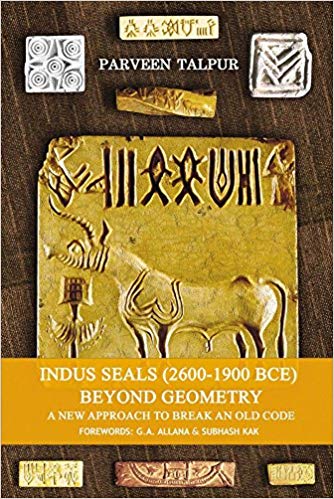
The fish appears as a savior in many ancient legends spread around the World.  The belief in its powers may have existed in the Indus Civilization (2600 to 1900 BCE) as indicated by the discovery of a large number of fish images from Moen jo Daro, Harappa and a few other ancient Indus towns. Total number of symbols/signs engraved on Indus seals is close to 400 and out of these 10% is of fish and its variants. Fish images are also generously painted on the Indus pottery.

The first Indus seal discovered from the site of Harappa was engraved with six signs – one of these was a fish. Its image was published in 1875 by Alexander Cunningham in his report in the Archaeological Survey of India. About half a century later when Sir John Marshall, the director general of the Archaeological Survey, published the first account of a number of seals discovered from Harappa and Moen jo Daro, fish was immediately spotted by Ernest Mackay. He was the Director of the Field Museum-Oxford University and was excavating Mesopotamian sites. Mackay drew Marshall’s attention to a fish sign engraved on a seal discovered from Kish, located in Persian Gulf. Fish symbol has been discovered in other civilizations East and West of Indus; from Japan to Mesoamerica. Fish Talisman’s, mostly depicting carp, continue to remain popular in today’s China and Japan.  Yuri Knorozov, the Russian scholar, who is more known for deciphering the Maya script, had suggested that the fish depicted on Indus seals is carp. Knorozov’s view that Indus script represented a proto-Dravidian language eventually lead the fish to a celestial status.

In 1950s Father Henry Heras, a Jesuit priest and a supporter of Knorozov’s idea suggested that fish actually represented star as in Dravidian language the word Minh is a homonym for fish and star. He used the signs engraved next to the fish for further proof. For instance the inverted letter V sign over the head of the fish was interpreted roof and represented the black star or Saturn. The fish sign appearing with six vertical strokes depicted six stars and represented constellation Pleiades.

Heras’ theory is further developed by Asko Parpola and Iravatham Mahadevan. However, there is an opposing view presented by S.R.Rao suggesting that Indus script represents an Indo-European language. As the two schools of thought Dravidian versus Sanskrit argue against each other, there are scholars who question whether Indus script is a script at all and whether the fish sign is a fish. Walter Fairservice argued that the eye of the fish is missing. Also, fish is not represented in an upright position in later Indus folk art, could it be just a loop or a letter? One of the recent researchers feel that fish may have been used for weights in the Indus cities. Furthermore, what appears as a roof to Heras appears as a crown and a mountain to others.

Speculations can multiply and the argument can go on for another century. It is about time to seek clues in diverse and scattered sources such as the mythology, etymology, ancient texts and indigenous folklore. Below are just few thoughts.

There may be a reminder to the old myth of fish power in a Sindhi saying ‘Jeko chawundo Jhule Lal Tehnija Theenda Bera Paar’ meaning whoever says Jhule Lal (swing Lal) his/her ship will reach the shores (safely). The story behind the saying is that River saint Udero Lal as a child, rested in a jhula (swinging crib) that kept on swinging on its own. In iconography, however, he is depicted riding a fish that swings with the waves of Indus waters. Fish in fact is a vehicle that takes Lal through the storms of life, hence the slogan Jhule Lal.

Some of the fish images engraved on Indus seals are depicted with horns. If these could be interpreted as numerals, vowels, diacritical marks or rays. They can also be interpreted as a symbol of superiority and authority. A deity engraved on Indus seals and labeled as proto-Shiva too is wearing horns. The tradition continued in historic times and even Alexander the Great is depicted with horns on a few images. The last name Singh adopted by martial communities of Rajputs and Sikhs, literally means horns. Above all the exalted fish in Manu’s story is said to have horns around which Manu fastened the rope that dragged his ship to the shores.

The missing eye of the fish so far can be found in Mahabharata where Arjun, the ace-archer shoots the eye of a fish statuette and wins the competition. The story is used for moral lesson; while going through the vicissitudes of life remain focused on the target; Arjun won Draupadi as during the competition he did not bother to see what others were seeing-the sky, the clouds and the trees.

As for the upright position perhaps ancients discovered one fish in Indus that swam against the current. The palla fish of Sindh, perhaps the upright position is to illustrate the resolve of a struggling fish. Knorozov had already compared images of Indus fish with carp, another fish that is known to swim against the current and which is still considered a symbol of courage and resilience in Japanese and Chinese cultures.

And on this day of Christmas let’s not forget the Biblical references to fish. Merry Christmas.

“What’s in a name?” Take the case of Sindhu the original name of River Indus. Different people and different platforms discuss it in different ways. The mere fact that they still discuss the name that has been anglicized since centuries is important.

Last month I had been directly involved in two discussions on the subject. First was on the facebook of Central Trading Zone launched by Saleem Aziz. It was about how the name was changed. The second was a serious conversation with Dial Gidwani, founding president of the American Institute of Sindhulogy, who is also developing video games on non-vioence theme. The conversation revolved around the question why do we still use the name Indus and not Sindhu?

To begin from the very beginnings will answer the first question. It takes us to the times when ancient rishis watched “The Rivers come forward triply, seven and seven and Sindhu in might surpassed all the streams that flowed.” This is just one line from a hymn in the tenth book of Rig Veda, the sacred Sanskrit text that mentions river Sindhu for the first time. According to Max Muller, the German translator, Veda was compiled around 1500 BCE, probably on the very banks of Indus. The spectacular scenery and the might of Indus had inspired the composition of hymns on Sindhu. The River, considered sacred, is further described as the lord and leader of the moving floods, active as a dappled mare, mighty as a bellowing bull, kind as a mother to her calves, rich in gold, rich in ample wealth for whom Varuṇa, the water god, cut the channels for its forward course.

Certainly, river was primary, the country around had no name, and was identified only by the river, hence the Indus region was known as Sapta Sindhu, the land of seven rivers. According to some experts it is a referral to Indus’ delta, ridged with its ever shifting branches rushing to the Arabian Sea. Sindhis call it Lar, the slope, the name also used for lower Sindh. Sapta Sindhu is also identified with Punjab, which is now left with five rivers but is still called by the numbers of its rivers, Punj, five and aab, water.

The process of Sindhu’s name change began with the arrival of Achaemenids when they conquered the land, converted it to a Persian satrapy and recorded it as Hapta Hindu. This is when letter ‘s’ was changed to ‘h.’ However, soon after Alexander’s conquest of Darius’ satrapy, Megasthenes, the Greek ambassador to the court of Chandragupta Maurya, recorded the region as Indos ( Indus) by dropping the initial ‘h’ and ending it with ‘s.’ Ending place names with ‘s’ was a common practice of Greek chroniclers and hence we come across Indus kingdoms such as Musikanus, Oxykanus, Portikanus, to mention a few. The suffix kanus is also spelt as kanas and the only remnant in Sindh of these versions is Larkana (without s). From Greek chronicles the name Indus crept into Latin and then to Old English and French which resulted in their own versions of Ind and Ynde.

With the passage of time Persian version Hindu extended beyond the land of Sindhu to Bharat Varsha, the old name of India. Hence Hindu came to be applied to Hindustan (the country), Hinduism(religion) Hindi (language) Hindukush (mountains), Hindu (person), Hindura (a piece of furniture, the Sindhi swing) but it was never applied to the river which is known to the world by its Greek version Indus. And then came the Arabs. They counted Sindh and Hind as two different countries. They also referred to the river as Aab-e-Sin, The water of Sin (or Sindh) the name is shortened to Abasin. Mehran is yet another name for Indus and the only other example of suffix ‘ran’ for river name is Puran, an abandoned tributary of Indus in lower Sindh. Ironically an ordinary Sindhi calls Indus simply a darya, river.

As to the question why we call Sindhu Indus? Here are some of my thoughts. If water worship ever existed in Indus Civilization then Darya Panthies, a Hindu sect of River worshippers in Sindh, deserve the credit for valiantly preserving the practice in some form until mid-twentieth century. It’s logical that not much of this sect is known after the Partition. Sindhi Hindus, in general suffered the worst under Partition as they had to say farewell not only to their ancestral homes but also to their beloved river. They must have drawn some solace from the fact that Sindhu continued to remain in the Indian national anthem. They have also reconciled to fulfill their urge of embracing Indus at its course that traverses through Ladakh district. Sindhu Darshan festival is now celebrated annually at Leh in India to highlight the River as an example of communal harmony and peace.

As far as the present inhabitants of the Indus region are concerned they may not have any memories of the long lost water cults performed in the Great Bath complex of Moen jo Daro, but Pakistani Sindhi Hindus and Muslims alike revere Udero Lal, the river related saint also known as Darya Shah, River King. Lal’s origins are lost in the murky past, he is considered to be a mythical figure but he is also confused with Lal Shahbaz Qalandar. He may not be an eqvivalent of ancient Varuna, but he is considered to be an avatar of the immortal Khwaja Khizr, the sage of Islamic tradition. Khizr guides the mortals through the labyrinth of life. He too is an elusive character appearing in different time zones and different stories throughout the Islamic World. Lal’s identification with Khizr has led to his other title Zinda Pir, the Living Pir. And like Khizr he too rides a fish, the image that abounds on Indus seals and in Islamic iconography depicting Khizr.

Fish symbol will require another blog; suffice it to say here that Udero Lal’s fish is identified with palla, which is more known for being the queen of Sindhi cuisine and less for its heroic struggle of swimming against the current. Whereas in Japan, carp, another fish that swims upstream against the current stands for courage and determination. Legend has it that Khizr too swam against the current and finally reached the island in upper Sindh where he rests in peace.

According to Islamic tradition, Khizr is the one who had guided Zulqarnain (another name of Alexander the Great) to Aab-e- Hayat, the Water of Life. Various locations are cited for the source of Aab-e-Hayat, Indus, is considered to be the most likely source.

Did Alexander seek immortality? “When Alexander sought he did not find what Khizr found unsought.” Nizami says so profoundly what history tells us coldly of an ironic end; Alexander died young in his early thirties.

Names get mingled through the mists of time, but the truth behind them does not change. Their power is not lost, call it magic, call it mystique. Thousands of years ago the might of Sindhu had given birth to the largest and most non-violent civilization of the ancient world. It may sound surreal to say that in this day and age when a handful of Mullas on one side and Hindu fundamentalists on the other side are flaring up hatred between innocent Hindus and Muslims non-violence can prove to be the most effective weapon against their monstrous mission.
The doctrine that holds all forms of life sacred and avoids any form of violence against fellow human beings, animals, insects and even plants is rooted in Indus Civilization. It runs in the blood of Hindu, Jain, Buddhist and Sufi philosophies. It is also the the common heritage that Indians and Pakistanis possess in a divided land so let’s give non-violence a chance. Call it Ahimsa or whatever; Ahimsa by any other name won’t hurt.

The recent news of 14 year old Malala Yousafzai, who was shot in the head by Taliban gunmen, had shaken the world. But life goes on, Malala is recovering and I got distracted to a Sufi music ensemble. For the “first time in Midwest” said the advertisement while describing the event as “mystical fusion and mesmerizing Sufi songs.” Star performers were Ustad Hidayat Hussain Khan (son of legendary late Ustad Vilayat Khan) on Sitar and vocals, and the Grammy winner, Steve Gorn on flute. But what has Sufi music to do with terrorism?

Power of music can be calming and inspiring, it can be furious too. Raag Deepak, they say, is capable of igniting fire and can set forests ablaze; Raag Malhar can come to the rescue by bringing in rains. Legend and the film have it that Akbar the great Mughal emperor tested if it could also melt rocks. He ordered a competition between Tansen, one of his nau-ratans (nine gems) and Baijnath Mishra, a young obscure musician. And he let his anxious courtiers witness the supernatural spectacle.

In reality, however, Akbar believed in the powers of the saints and had walked barefoot to the shrine of Saleem Chishti to beg the great saint for the birth of a son. (watch the first scene of Mughal-e-Azam).The miracle did happen, Akbar was blessed with a son, he named him Saleem after the saint; Saleem the Moghul is popularly known as Jehangir.

Sufis and music go together. Sufi songs are hymns to the divine and odes to the beloved saints; set to music these can stir hysteria. Some of the Sufi saints have been poets and some of their disciples have written devotional verses that are still recited around their shrines and beyond. When Ustad Hidayat recited Amir Khusro’s evergreen “chaap tilak sub cheen lee mujh say naina milaikay” (here is a recording from one of his earlier concerts) it mesmerized a versatile crowd mainly consisting of Indians, Pakistanis and Americans. If music is the universal language it can be the binding force between nations, we can turn the pages of history to confirm this.

Sufism is a phenomenon of the vast and diverse non-Arab Muslim World. South Asian Sufism is immersed in poetry, music and dance, and nowhere it has been as effective as in India where it made Islam thrive in a climate of religious pluralism and where Sufis came to be venerated by non-Muslims. Even today the shrine of Khwaja Moinuddin Chishti at Ajmer, attracts both Hindu and Muslim pilgrims from all over the country. The age old mystique continues in Pakistan where shrines such as of Lal Shahbaz Qalandar and Shah Abdul Latif Bhitai in Sindh are equally revered by the Hindus of Pakistan. Let’s not forget that Sufi saints themselves lived above religious and ethnic prejudices. Nizamuddin Auliya of Delhi, is known to have practiced yoga and meditation. Shah Abdul Latif of Sindh, traveled with the yogis to perform pilgrimage to Hinglaj Mata, the western most holy place of the Hindus. Sufi saints of Kashmir are even confused with Vedic rishis.  The legacy of tolerance continues as the musicians from India, Afghanistan, Bangladesh, Trinidad and United States ended their concert in Columbus, Ohio, by paying tribute to Lal Shahbaz Qalandar of Pakistan. And this reminds me of Runa Laila, a Bengali singer, singing the same song in the seventies of Pakistan.

The concert was a fundraiser for Asha Ray of Hope, a non-profit organization that protects women against domestic violence. Sufi music ensemble was just the appropriate choice as shrines had always been sanctuaries for women in South and West Asia. In their hours of anguish they often wail at the shrines and invoke dead saints through songs and dance. Women can even rise to sainthood in Sufi Islam, Rabia may be the most known women saints of the Muslim World but there are obscure women scions of ordinary saintly houses in rural Pakistan who are symbols of comfort to the many distressed women of their neighboring villages. Militant Islamist groups are certainly against this brand of Islam. In 2009 few days before bombing the shrine of Rehman Baba in Peshawar, they had warned the custodians to stop women from visiting the shrine. Three years later they have stooped to the level of targeting young girls who advocate education. Talibans eventually destroyed the Rehman Baba shrine, the grief and anger bought Afghanistan a step closer to Pakistan as the Afghan government responded by bearing the costs of reconstruction of the shrine. Rehman Baba is revered in Afghanistan, Pakistan and the tribal belt between the two countries; his poetry echoes in the Pashtun land.

Sufi saints continue to keep the countries united even in the worst of times. Sufi bondage between Afghanistan, Pakistan and India is worth recognition by the foreign policymakers of these countries. Perhaps this can be one of the strong pillars of the Afpak policy of Obama administration. Sufi music is equally evolving, it has the power of conquering the youth as it adjusts to the new trends and even creeps in the contemporary non-religious realm. Nusrat Fateh Ali Khan from Pakistan has set the trend. And here is the Bollywood version, enjoy.

Imran Khan’s Interview on CNN by Christian Amanpour

In his book ‘The First Afghan War 1838-1842’, J.A Norris quoted one of the relevant descriptions of the Afghan character. The quote from the Asiatic Journal states that the Afghans “are neither irritable nor implacable, but retain a long remembrance of injuries not retaliated: revenge is esteemed a duty.”  Norris emphasized that “we should remember this in all that we read about the First Afghan War.” There were two more Anglo-Afghan wars, a decade long Soviet occupation and now we are at the tail end of yet another inconclusive war between the Afghans and the NATO forces.  How much did the western world care to remember what Norris and many others had advised?

Most of the Afghans are ethnically Pashtuns or Pakhtuns. Apart from Afghanistan a large number of them live in the Khyber-Pakhtunkhwa province of Pakistan and even larger numbers live in the Federal Administered Tribal Area (FATA) a semi-independent region between the borders of Afghanistan and Pakistan. When it comes to foreign interventions, Pashtuns and non-Pashtun tribes of the region fiercely resist their enemy. But why is revenge their most powerful weapon to date? Part of the answer comes from their history, which is yet another avenue neglected by military and political strategists.

Since centuries the region is known to be a world where even tribal and family quarrels can easily turn into blood feuds giving birth to endless cycles of revenge.  Revenge is therefore, ingrained in Pashtunwali  (literally, the way of Pashtun), the unwritten moral and social code that predates Islam. The code has evolved through the centuries hence historical currents, along with socio-cultural forces, have gone in the shaping and making of the Pashtunwali.  Each new invasion and occupation, beginning from the Achaemenid kings of the Persian Empire to Alexander the Great and from the Moghuls and Nadir Shah of Iran to Runjeet Singh of Punjab, had only sharpened the vindictive instincts of a people who value independence above all.  So it is logical for revenge to replay its role with more vigor in the present Great Game between the new contenders. Each drone attack gives a new life to the resolve of revenge against the US army, and the bloodshed continues. Is there a way to put an end to the cycle of revenge?

Law of revenge – an eye for an eye – is engraved on Hammurabi’s code. It may have existed as a convention even earlier but so has the desire to erase it. There are only bits and pieces of circumstantial evidence scattered in mythology, folklore and literature to support the existence of such a desire. Greek trilogy Oresteia tells us that Goddess Athena succeeded in replacing it by law of mercy. In recent past Truth and Reconciliation Councils have been advocating forgiveness to resolve conflicts.  Imran Khan’s peace march to demonsterate solidarity with the drone victims by all means is the beginning of a process which might lead to the ending of drone attacks and the chain of revenge.  His march is also a reminder that Pashtunwali has another potent component- hospitality.  That is why even in the days of deadly drone attacks peace is not altogether disregarded. The elders of the tribes had welcomed the march, Americans refrained from bombing, the Talibans promised a safe passage; decades of war must have worked a change in their thinking. Khan’s mission was to draw world attention towards the heavy ‘collateral damage’ of civilian killings caused in Waziristan by American drone attacks. An investigative report prepared jointly by Stanford and New York Universities has already revealed harrowing accounts of the victims and  recommended a serious re-evaluation of current policy of target killings by drones. Participation of CodePinkLauren Booth  and Clive Smith  in the march is symbolic of the fact that American, British and Western people are equally against civilian killings.

Now that the United States is already in the process of withdrawing its forces from Afghanistan it is time to sit around the table and plan future relations. This calls for some degree of mutual trust between the participants – Americans, officials from Afghanistan and the Pakistan governments and  representatives of different tribes and militant groups. Once again we need to turn the pages of history to see how receptive Pashtunland is to peace. Surprisingly, non-violent religions Jainism and Buddhism had lasted here for centuries under the Mauryan and Kushan dynasties.

The fact that the largest Buddha images in the world are carved in the mountain walls of Bamiyan, that Buddha came to be represented in human form under the Kushans and that the most beautiful specimens of Buddhist art were sculpted in the Gandhara region of Pakistan and Afghanistan, proves that peace must have lasted long enough for all these accomplishments. History mostly highlights the mountain passes, large enough for armies to enter and exit, but again if one cares to look into its margins it shows the Silk Road that merchants frequented to barter their goods, exchange culture and enjoy exotic stories. So there is more in the region  than mere revenge and bloodshed. Today there are graveled roads waiting to welcome any messenger of peace and there are institutions, experienced in conflict resolution, ready to assist. Conflicts between tribes are solved by Jirga which is a body composed of the elders of the tribes who draw their authority from the people. Perhaps these can help in reconciliation, already there is a thinking that the institution of Jirga should be allowed a role in the present governance of Afghanistan. Why can’t it play its role in the global conflict that involves its people?

It’s about time global makes room for local in the process of peace. It is also expected of representatives of the tribal world to move a step forward and follow certain global norms and who can be the most effective representative of the region than Khan. Hailing from the Burki tribe, long settled in Punjab, he has returned to his ancestral troubled region of Waziristan to nurse its wounds. He has already written a travel book on the region and  he now plans to demonstrate against the drone policy in front of the United Nations. Though Khan was barred from marching in Waziristan but he has shown the road that leads there. Hopefully, the World will see the troubled region beyond the blazing images of drone attacks and will register the positives of the tribal society. Women are inconspicuous in that society which is a shame but there are seeds of democracy.  Jirga, at the moment addresses the grievance of each individual involved. Pashtunwali looms large over these indigenous courtrooms, it stresses on community consensus and expects decisions to be unanimous.  The system goes beyond the western concept of democracy.  To explain this I can only borrow the words of Nelson Mandela – the words he used while describing the tribal system of justice practiced in his native land:

“Democracy meant all men were to be heard, and a decision was taken together as a people. Majority rule was a foreign notion. A minority was not to be crushed by a majority.”

Hopefully women in this part of the world will rise above the status of minority.

The recent violence in Karachi and the rest of the country reminds me of an alarming day in November 2007.

The General had declared a state of emergency in the country. There could have been a coup to oust him; a counter coup could have followed to restore him. People feared more bomb blasts, even a nuclear holocaust. I and my husband were cutting short our trip and driving down Drigh Road to the airport to leave for New York.

Memories of Drigh Road came rushing to me, competing with its traffic chaos. General Ayub Khan, Chou En Lai, Jawaharlal Nehru and Jacqueline Kennedy appeared in a flash as I passed by Gora Qabiristan. Somewhere close to it, waiting with the school children to welcome foreign dignitaries, I too had waved at them. Soon we reached the Embassy Inn.  There used to be a driving school where its building stands now.  As a teenager I had secretly enrolled myself for driving lessons. During those days my greatest fear was running into the car of my eldest brother against whose wishes I was learning to drive. How the dangers have multiplied.

On the morning of May 12, 2007 after a few hours of sleep, Nicholas Schmidle, a young American writer, had walked onto the roof of the Embassy Inn to have a look down over the city. Two years later he described in his book what he saw of Drigh Road, “The main road connecting the downtown area to the airport was empty… Gas stations had switched off the pumps and closed so that rioters couldn’t burn them down. Convenience stores, office buildings, and even the lobby of the Embassy Inn had draped thick curtains over the windows to prevent bricks from crashing through.” What Schmidle saw was just the beginning of trouble.

May 12 was a day of public and political unrest. A few months earlier, in March 2007, the government of General Pervez Musharraf had suspended the Chief Justice, Chaudhary Iftikhar. This had caused great resentment in the public and a countrywide Lawyer’s Movement was launched to restore the Chief Justice. The movement was gaining momentum and thousands were expected to welcome the Justice as he was scheduled to visit the city. Musharraf and his partners feared this massive crowd and hence the resistance which resulted in many deaths of the citizens. By November, things were out of control and Musharraf was left with no choice but to impose the Emergency to suppress the protests.

Thus it was ironic in those hostile moments to spot, out of all the places, the Friendship House. Located across from the Embassy Inn, during its heyday in the Cold War years, it was the House where friends of the Soviet Union were welcomed. It was also a great source of books on Russian writing, especially the Marxist-Leninist literature. Russian movies shown in its lawn were a great attraction for the intellectual class of Karachi. I remember the advertisement for a film called ‘Cranes are Flying’.

One evening I saw Faiz Ahmad Faiz, the well-known poet and his wife Alice standing at the gate of the Friendship House and receiving guests. Faiz was a recipient of the Lenin Peace Prize and I suppose an honorable member of the House. In a minute’s drive, we passed by the intersection of Shahrah-e-Quaideen and I looked for the P.E.C.H.S College from where I had graduated, it was no more visible. Once again Faiz appeared in my memory, walking in the corridors of the College. He was a regular visitor there, as Alice was an English teacher at the College. Across from the College was Khayyam Cinema that, on occasion, held students’ shows. It was at Khayyam where I saw Sophia Loren and William Holden in ‘The Key.’ I was too young to enjoy the movie but old enough to fall in love with Sophia Loren. Khayyam is no more there; the new building with the same name is now huddled with shops and offices, the roads around it crowded with trucks, taxis, and rickshaws.

At one point beyond the airport, Drigh Road converts to the highway that leads to Hyderabad and Mirpur Khas and my village, some 250 miles away from Karachi. Ah, those long journeys in the good old days when going to the village during each summer and winter vacation was a joyous occasion. Today, even reaching the airport was a punishing journey. I was tense, and so was the city. The car slowed down as we passed by Karsaz. “This is the site of the bomb blasts,” our driver informed us. It was only a month ago – a 139 people were killed and many more were injured.  Benazir was one of the survivors.

At a little distance from Karsaz is the Pakistan Air Force base, or PAF as it is commonly referred to. In its previous life, it was the RAF, or the Royal Air Force of British India. In 1927 when T.E. Lawrence worked in its Engine Repair Shop he found the environs dreary. “It is a desert, very like Arabia,” he complained in a letter. He was constantly reminded of what he was trying to erase from his memory. And yet this is where Lawrence the archaeologist, more known as ‘Lawrence of Arabia’ from David Lean’s epic film, had come to change his career. He had chosen to be an ordinary airman, a quieter career, to help run away from his fame. In the evenings he would go out to listen to the music of camel bells along Drigh Road, but that would bring back even more memories.

Automobiles have replaced the camels since long. The road itself has gone through many changes including its name. It is now called Shahrah-e-Faisal, and the PAF base is PAF Faisal – both named after Shah Faisal of Saudi Arabia. I am still used to calling it Drigh Road, its original  name and I am not the only one. Its traffic through the years has increased; its chaos has killed many people, and the dangers are multiplying. I dreaded a traffic jam, a sudden blockade of the road, the stoning and burning of the cars by angry protestors. What if we missed the flight, or worse yet, if the airport was closed and the flights cancelled. Our son and daughter made a frantic call from New York to check if we had made it to the airport. “We are almost there,” I lied.

Miraculously we did reach the airport and in another two hours, from the window of the airplane, I was gazing down at Pakistan’s troubled land. The view below was changing fast. The buildings were shrinking and the roads narrowed. On one side of the city huge clouds of black smoke floated.

But I had already drifted from the enflamed city. Writing notes for my article on Moen jo Daro, had taken me to the serene pastures of the past, when the land below bloomed with good harvest. The River running through the land had given birth to the largest civilization of the ancient world. It was also the most peaceful of civilizations, having lasted for seven centuries without a single war. The ruins of the 5000 year old metropolis have not revealed any military barracks, any prisons, or any weapons.

The story of Pakistan begins with the birth of that civilization.  But where will this narrative end? I still hope for the Karachi that Sir Charles Napier had hoped for on his departure from Karachi: “Thou shalt be the Glory of the East, would that happen I could come again to see you, Kurrachee, in your grandeur.”

Rimsha Masih, an 11 year old Christian girl has been arrested on blasphemy charges. According to some reports, she is suffering from Down syndrome and is a minor, between the age of 11 and 16. Even if she is 18, it is laughable. Isn’t the law supposed to consider the maturity level of the accused? Even in criminal trials, the insanity defense has a place. At least in such cases where it is so easy to distinguish between maliciously framed charges and genuine, a speedy justice should be allowed to save the anguish of the innocent.

I am reminded of a Proclamation of Sir Charles Napier wherein he warned the men against killing their women in the name of honor. Those who violated will be lynched, he threatened, and that’s when the killings stopped. Proclamation was issued in 1844, a year after he had conquered Sindh. Such drastic measures, however cannot be expected in today’s explosive Pakistan. Salman Taseer, the powerful Governor of Punjab and Shahbaz Bhatti, the only Christian minister in Pakistan’s cabinet were assassinated just because they protested against the death sentence of a Christian woman charged with blasphemy. The woman still survives in prison. And languishing in another prison – the notorious Adiyala Jail – is Rimsha. The killer of Salman Taseer is also imprisoned in Adiyala.  Officials claim the girl has been kept in custody for her own security; one hopes that is true. However, there is some hope in the twist of fate that has lead the the cleric to custody. He is the mullah who had been inciting the neighborhood against the girl, ironically he has been charged with blasphemy. According to a witness, he had tampered with the evidence and added pages of Koran to make his case stronger. If this had happened in ancient times, people would have considered it God’s intervention to save the girl, there would have been no further proceedings. But here we have to wait and see what the man-made law has to say.

Persecution of minorities has been on the rise since the birth of militant Islamist groups in Pakistan, It is now taking a bizarre turn as Muslim minorities are being targeted. Since September 2011, there has been a chain of Shia killings in Balochistan and Northern areas.  In the latest incident, 21 Shias have been killed in Gilget-Baltistan. After the Shias, who is next on the hit-list?

Growing up in Sindh, Pakistan’s most cosmopolitan province had been a blessing for me, but visiting it after 17 long years in 2007 had been a nightmare. Let me begin with Karachi. Orhan Pamuk says his city, Istanbul, is drenched in Huzun, melancholy. I would say my city is haunted by macabre. Did it devour the minorities? Where are the Goans and the Anglo-Indians who walked on the streets of Saddar; the girls in dresses fluffed with can cans; teddy boys occasionally wearing tuxedos – they were the pioneers of rock bands. Christian men were doctors, teachers,clerks and railway and radio employees; their women worked as stenos, teachers, governesses and nurses, a few of them were doctors. In those days some of them looked as beautiful as Ava Gardner in ‘Bhowany Junction’ and many of them dressed as Ava. Even as a little girl, I knew it was the Christian community crowded around Capitol Cinema during the days when Ben-Hur was released. And what about the Parsi women in their colorfully bordered sarees worn in a distinct style strolling at the Old Clifton and shopping at Fashion Arcade and Ghulam Mohammad Bros on Elphinstone Street, now appropriately named Zaib-un-Nissa Street after Pakistan’s first woman editor who published Mirror and daringly wrote against martial law. I also remember an evening spotting my Burmese professor on Clifton road. Slim and effeminate, almost an Aung San Suu Kyi, she was in her signature lungi and blouse. I can even recall the colors, peach and cream, and I am sure she had a matching fresh flower pinned in her hair. Yes, there is still an Anglo-Burmese community in Karachi but like many other small communities it is invisible.

Rural Sindh is even more mottled. The Hindu community’s sub-divisions were distinguished by the colors and prints of the ghaghras, cholis and chunris that women wore. Upper and middle class ladies followed the trendiest fashion of the day. Hindus in Sindh are not divided by caste but by occupations -blacksmiths, shop keepers, shoemakers, sharecroppers and landlords; in the cities some of them owned ginning factories and cinema houses. One of them, from Omarkot, was Rana Chandra Singh, the member of the Sindh Assembly. Hindus in Sindh lived in harmony with each other and with the Muslim community. After Partition, most of them preferred to stay back in Pakistan. Today Sindh has the largest Hindu population of Pakistan and most of them are concentrated in my home district Tharparkar.

Sindh has not only sheltered its pre-Islamic population but even some of the pre-historic specimens. Tribes like shikaris (hunters) still live under its sky.  “The Shikari is neither Moslems nor Hindoos” writes the well-known orientalist Richard Burton in his Sindh and the Races that inhabit the Valley of the Indus. “They are very numerous about Omerkot and the Thurr, where they subsist by manual labour, agriculture and hunting. In these regions there is something remarkably wild and savage in their appearance.” The last I saw shikaris was in 1990. Oud is yet another ancient tribe, the survival of Oudki language in lower Sindh is similar to the survival of Brohi in pockets of Balochistan and Afghanistan, but as a specimen of Dravidian, it’s not as popular as Brohi is with the linguists and anthropologists.

During a visit to my ancestral village in 2007 I observed the younger generation of Oud women had discarded their traditional dress. “The bus driver will not allow us to board,” they told me. They were shy to speak Oudki, they had been mocked enough for speaking it. This is just another way a minority looses its distinct identity, through time and through social change, and this cannot be helped. Loosing minorities, nonetheless is loosing a part of our heritage and a part of the heterogeneous character of Pakistan. Much before its birth many races and religions had already merged on its land-Persians, Greeks, Scythians, Parthians, Afghans,Turks, Buddhists and Jains. Not a single Jain now lives in Pakistan, you can meet them only on the pages of gazetteers and you can feel the aura of their non-violent spirit in their abandoned temples in Nagar Parkar. What was once a majority is not even a minority now. We must remember, what we call minorities today, their ancestors have lived and died here, their bones mingled with the soil on every inch of Pakistan.  Let’s not sift the dust and let’s not loose whoever is living now. Pakistan is still blessed with a variety of cultural, ethnic and linguistic groups  Step out of Sindh and you will come across many more. Recently in news were the Kalash, another endangered community.

The most encouraging fact in this grim situation is that the majority of Pakistanis, even the most religious Pakistanis, have a secular attitude. Imran Khan, Chairman, Tehreek-e-insaf, has been bold enough to ask the Supreme Court to take a suo motu notice of Shia killings. There is a group of lawyers who has filed the petition for the restoration of a Jain temple in Lahore and there are many more who are holding demonstrations in support of Rimsha. According to her lawyer she may be released on Friday (tomorrow). This should happen; the longer she stays in captivity the deeper will be the scars of the horrifying experience.

Earth – Film. Dir. Deepa Mehta

“Few years after the Partition, it occurred to the governments of India and Pakistan that they should divide their lunatics too in the way they had divided their other assets.  Hence the Hindu lunatics in Pakistani mental asylums were to be delivered to India and the Muslim lunatics in Indian asylums were to be transported to Pakistan.” These are the opening lines of “Toba Tek Singh,” written by Saadat Hasan Manto, the internationally known Urdu short story writer.  Manto, after his migration to Pakistan had even wondered whether his literary contributions belonged to India or Pakistan. (Today on Pakistan’s 65th birthday, Manto has been posthumously awarded the Nishan-e-Imtiaz, the country’s highest civilian award).

“Azadi,” an English novel by Chaman Nahal opens in a middle class neighborhood of Sialkot.   It was June 3, 1947 and few families had gathered around a radio to hear the announcement of Partition.  And when Lord Mountbatten, the Viceroy of India, makes the announcement in his sharp clipped accent, none of them understand his language but they feel ‘betrayed.’

Although exchange of population was not planned the communal riots such as the one in Nahal’s Sialkot started to erupt and forced  people to migrate to the countries of their respective religions.  More than ten million people moved in and out of the two countries, one million were killed,75000 women were dishonored and abducted and trainloads of dead bodies were exchanged.  One train with Muslim passengers was saved, ironically at the instigation of a corrupt Hindu bureaucrat and a Sikh prisoner, in Khushwant Singh’s novel “Train to Pakistan.”

Apart from Hindus and Muslims, Sikh community too migrated from Pakistan in large numbers, specially from the Punjab area.  And then there were other minorities, Christians and Parsis who were not affected directly but they could not remain insensitive to the carnage around them.  Bapsi Sidhwa was an eight year old Parsi girl, living in Lahore during Partition.  Many years later she wrote her novel “Ice Candy Man” based on her memories of Partition.  It was published as “Cracking India” in United States and was adapted by Deepa Mehta for her film “Earth.” If you want to see horrors of insanity during Partition and Aamir Khan in one of his best and unusual roles you should watch “Earth.”

Most of the Indians and Pakistanis know Partition through history text books and official records, but  the untold pain that millions of men and women were subjected to has come to them, in bits and pieces, through literature and films.  It has also come to them through many stories of victims and witnesses floating around them.  After the 50th anniversary of India’s independence and birth of Pakistan there have been some attempts to record such stories.  And truth can be more dramatic than fiction as these indeed have added passion to the cold facts collected in the official records. Wary of the statistics and the political chronicles of Partition, Historian K. K. Aziz had already asked “Where are the people? There is no social history.” Perhaps the answer can now be seeked in books such as “The Other Side of Silence: Voices from the Partition of India”(Duke University Press, 2000) by Urvashi Butalia and “The Great Partition: The Making of India and Pakistan” (Yale Univeristy Press, 2007) by Yasmin Khan. Both focus on human tragedy and not on the bickerings of the politicians.  Hence both highlight smaller players, the ordinary people who had been sidelined in history.  On the Pakistani side oral history is also being preserved through exhibitions and videos by Citizens’ Archives, a multi-faceted organization initiated by a younger generation of Pakistanis.  Hopefully, this will turn into yet  another source where one could locate the records of ordinary people who played their roles in the big event.

Although this non-fiction material will be helpful in the greater understanding of the human component of Partition history.  But Pakistan is already 65 years old and is on the center stage of global politics.  Its story has moved forward and many tragedies have piled on the primordial tragedy of Partition-separation of East Pakistan, wars with India, military coups, execution and assassination of its elected prime ministers and its ongoing war on terrorism.  Each episode can be written with the blood of hundreds and thousands of innocent citizens but I am not suggesting to stitch together the smaller stories of the lives lost in order to tell the larger story of Pakistan, may their souls rest in peace.  However, as the World has come to know Pakistan through day-to-day reporting on its political, diplomatic and military fronts and have won many notorious titles- a failed state, a flawed state, a dysfunctional state, the most dangerous country in the world- I can only hope that some writer resolves to highlight some of its virtues as well.   After all  Greg Mortenson discovered a profound hospitality in its villages at the foot of K2.  Certainly there is a Pakistan that exists beyond the blazing images of suicide bombings, the story of that Pakistan needs to be told. So far experts may have well-studied the state of Pakistan but the nuances of its society are least understood and it does not require a nobel laureate to narrate those.  In fact when Sir V.S. Naipaul was served a cup of tea in Pakistan he complained of it being cold, served by a dirty servant in a stained cup. But Mortenson found Pakistan’s ‘three cups of tea’ worth to crown his story.  So that is yet another issue, so much depends on who tells the story!